Falling Pickaxe – Play the Casino Game for Real Money
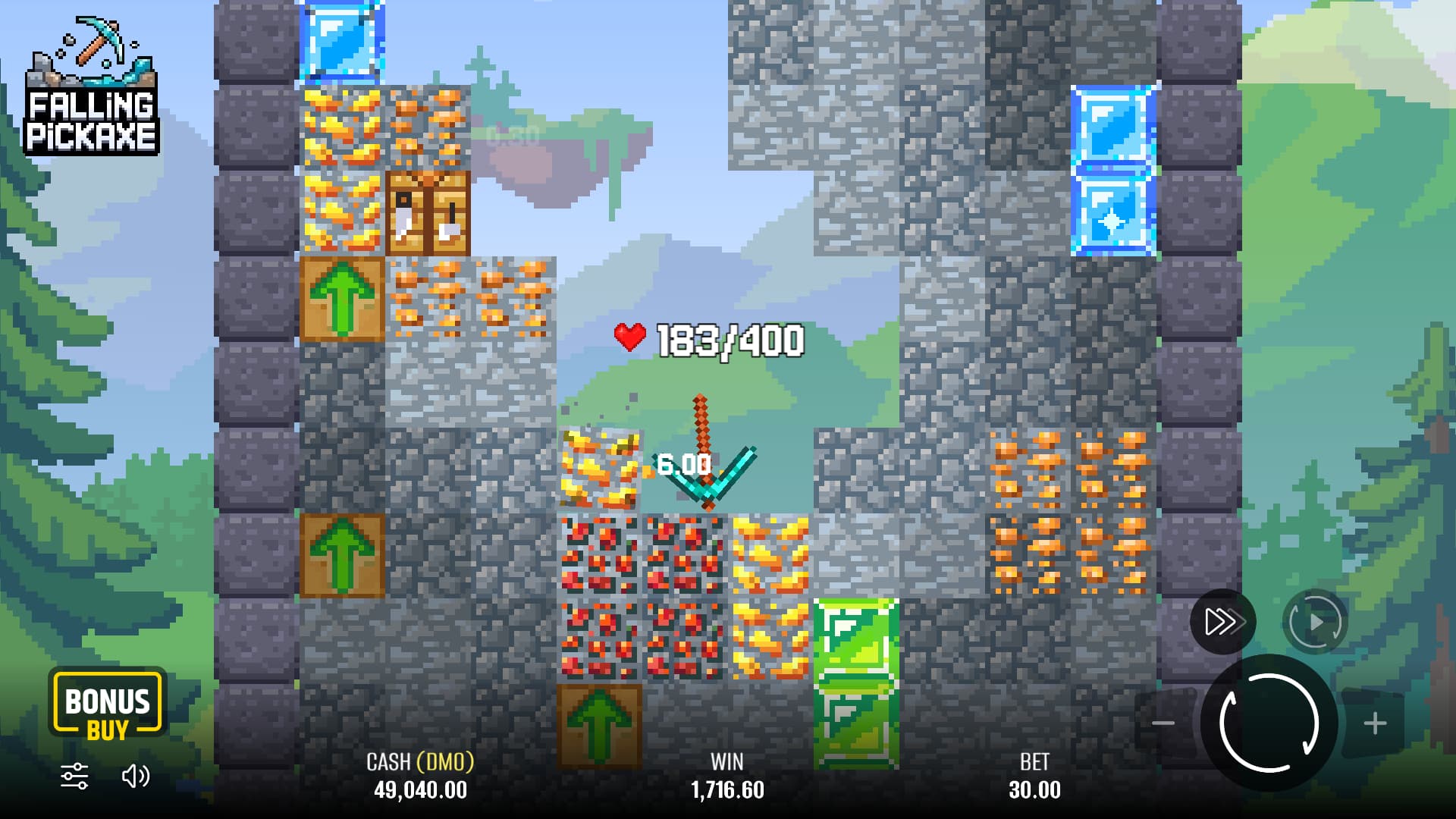
Falling Pickaxe is a mining-themed casino game from Pixmove. Each round starts with a single reel. It awards a wooden, stone, iron or diamond pickaxe, or a Cross with no tool. When a pickaxe appears, it drops into a mine and breaks the blocks in its path until its durability runs out.
The game is easy to follow: ore can add to the return, TNT clears nearby blocks, and a workbench can repair and improve the tool during the fall. You do not aim the pickaxe or time its strikes. The round plays out automatically after the opening spin.
Where to Play Falling Pickaxe
Pixmove – Official Game and Demo
Open our Demo page and press Play Demo to load the official game from Pixmove. You can see the controls and try virtual-credit rounds directly in the embedded player. Access may depend on your location.
If you choose to play through a casino operator, check that it offers the Pixmove version, accepts players from your country and publishes clear account and withdrawal terms.
How Falling Pickaxe Works
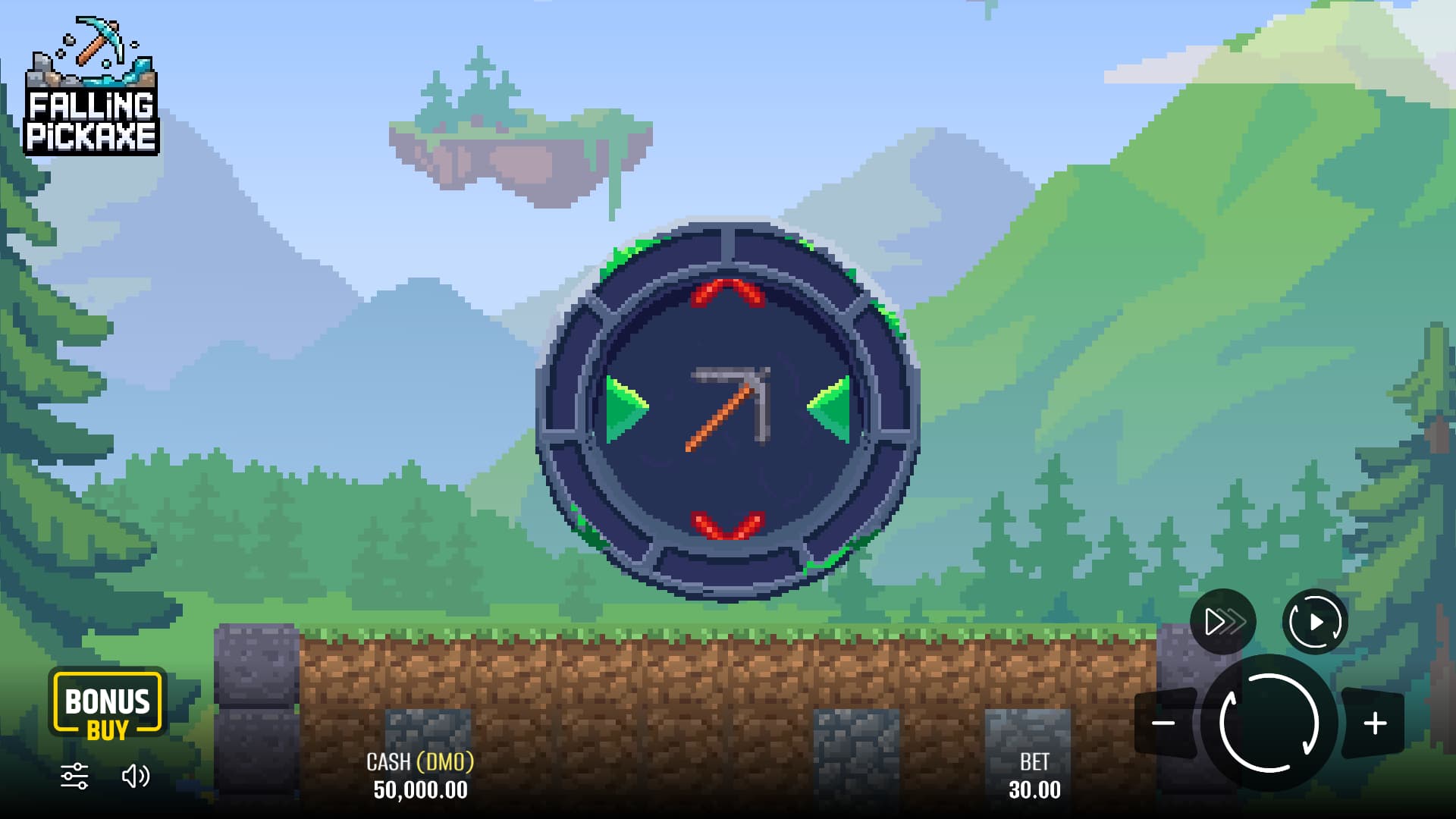
The starting reel and the mining sequence are the two parts of a round. A Cross ends the spin without a pickaxe. A tool result starts the descent, with the chosen pickaxe moving through dirt, stone and mineral blocks.
Every collision uses some of the tool’s life. Stronger pickaxes have more durability, so they can stay in the mine longer. What they meet still matters: spending life on ordinary terrain is different from reaching ore. A long descent does not automatically mean a profitable round.
The fall ends when the pickaxe has no durability left. The game then settles the round’s return. There is no character to steer and no route to select, so the result is not a test of reflexes or mining skill.
| Game detail | Information |
|---|---|
| Developer | Pixmove |
| Game type | Instant game |
| Release | June 2026 |
| Theoretical RTP | 95% |
| Volatility | Low, according to Pixmove |
| Published maximum win | 160× the stake |
Pickaxes and Durability
Wooden, Stone, Iron and Diamond are the four pickaxe tiers. The difference is more than a colour change: Pixmove describes stronger tools as having more durability. That extra life gives the tool more time in the mine, although it still needs useful blocks along the way.
| Pickaxe | Role in the game |
|---|---|
| Wooden | The basic starting tool. |
| Stone | A stronger tier with more durability. |
| Iron | A further increase in tool durability. |
| Diamond | The highest tier in the four-tool system. |
Durability is the tool’s remaining working life. It is not a payout multiplier or money already won. A diamond pickaxe can be a better starting point without guaranteeing that the return will cover the cost of the round.
A workbench can change a tool during its descent, so the opening reel does not tell the whole story. A lower-tier pickaxe may be repaired and improved if the right block appears. Read the in-game rules for exact life values in your version.
Minerals and Special Blocks
Dirt and stone make up the ordinary terrain. The resources named by Pixmove include copper, redstone, gold, diamond and emerald. The tool spends durability breaking through the mine, while ore can contribute to the round’s return.
The screen can look busy without every impact adding value. Use the result display and the in-game pay information to understand the amounts, rather than judging a round by the number of blocks that disappear.
TNT
A TNT block explodes and clears nearby blocks. It changes the space around the tool and can open up part of the mine. An explosion is a feature of the round; it is not a separate guaranteed prize.
Upgrade Arrow
An upgrade arrow temporarily increases the pickaxe’s size, letting it cover a wider area. Pixmove describes the effect stacking when further arrows are hit. A larger tool and a higher tool tier are different effects.
Workbench
The workbench restores durability and upgrades the tool toward the diamond tier. It can extend a descent that was close to ending. The repair is useful to follow because you can see its effect on the tool’s remaining life.
Falling Pickaxe RTP and Maximum Win
Pixmove’s current product page lists a theoretical RTP of 95%, low volatility and a maximum win of 160 times the stake. These figures describe the game’s mathematical profile. They do not predict an individual spin or session.
A 95% RTP does not mean that 95 out of every 100 spins win. It also does not mean a player will receive exactly £95 after staking £100. The percentage applies across a very large amount of play, while short sessions can finish well above or below that level.
Low volatility is the developer’s description of the payout pattern. Losing spins and losing sessions are still possible. The 160× maximum is an upper limit, not a usual result. At a £1 base stake, that multiplier corresponds to £160 if the maximum is reached under the game’s rules.
Source: Pixmove’s Falling Pickaxe page.
Free Demo Version
The Demo page on this website contains Pixmove’s official demo player. It lets you see the starting reel, follow the pickaxe and learn the controls with virtual credits. Those credits have no cash value and cannot be withdrawn.
Use it to decide whether you like the format. Some players enjoy following an automatic fall; others prefer a game with more choices during a round. A few demo rounds can make that difference clear.
A good demo run is not evidence that the same returns will happen with money. Treat the balance as part of the demonstration rather than a score that needs to be built up. Availability of the provider’s demo can vary by region.
Playing for Real Money
For real-money play, you need an account with an operator that offers the game and is permitted to serve you. Check local eligibility before registering. The supplier’s game page does not establish that every website carrying the title is suitable for your country.
Read the operator’s deposit, verification and withdrawal conditions. These can differ between services even when the game has the same name. Check any promotion separately: a welcome bonus can have wagering requirements, exclusions and withdrawal limits.
Pixmove also describes Bonus Buy options for entering a round with a chosen pickaxe. Check the full purchase price in the game before selecting one. Paying for a particular tool does not guarantee a return above that price.
Tips and Responsible Play
Learning the rules makes the screen easier to follow, but it does not remove the random outcome. There is no aiming technique or sequence of stakes that makes the pickaxe reach a particular mineral.
Pixmove describes one specific streak rule: after seven consecutive Cross results, the eighth spin awards a pickaxe. The promise is a tool, not a profit. Check the wording in the opened game before relying on how the rule applies to that version.
Set a budget and a time limit before starting a real-money session. Keep money for bills and everyday expenses out of that budget. Increasing a stake to recover a previous loss raises the cost of the next attempt without giving you control over its result.
If you find yourself playing out of frustration, close the game. A short break is more useful than waiting for a particular tool or feature to make the session feel complete.
Advantages and Disadvantages
| Advantages | Disadvantages |
|---|---|
| Simple rules and a clear mining theme. | Very little input once a fall begins. |
| Four tool tiers and several special blocks. | A Cross can end a spin without mining. |
| Official demo available from the developer. | Automatic rounds can become repetitive. |
| Portrait and landscape layouts shown by Pixmove. | A stronger tool does not guarantee profit. |
The presentation is the game’s strongest point. A tool wearing out, reaching a repair station or hitting an explosive block is easy to understand without learning a large set of symbols. The main limitation is that you are watching most of the action rather than making decisions inside it.
Falling Pickaxe Review
Falling Pickaxe gives an instant casino game a recognisable setting. The pickaxe provides a clear focus, and the durability system gives each fall a natural ending. The workbench fits particularly well: a damaged tool being repaired is an event you can understand straight away.
The game will suit players who like short, automatic rounds and pixel-art graphics. It is less likely to appeal to someone looking for a full mining adventure with routes, crafting decisions or progress that carries between sessions. The theme comes from that kind of game, while the mechanics belong to a gambling round.
Try the demo before deciding whether to spend anything. What matters is whether you enjoy the normal sequence after you understand it, not just the look of a diamond pickaxe or the maximum-win figure.
Frequently Asked Questions
Who makes Falling Pickaxe?
Falling Pickaxe is an instant game developed by Pixmove. This guide covers that version, rather than other mining games with a similar name.
Can I play the game for free?
The developer’s product page has a PLAY DEMO option. It uses virtual credits with no cash value. Access can depend on your region and the availability of the service.
Can I control the pickaxe?
The descent is automatic. You do not aim the strikes or choose the mining route.
Why does a pickaxe stop?
Its durability runs out. A workbench can restore durability during a descent, but otherwise the tool stops when it has no life remaining.
What is the maximum win?
Pixmove’s current product page lists 160 times the stake. This is the announced upper limit, not a typical round result.
Is there a mobile version?
Pixmove shows a portrait layout in its official materials. Open the demo on your device to check current browser access and readability.
Is a diamond pickaxe a guaranteed win?
No. A diamond pickaxe is the highest tool tier, but the blocks it encounters still affect the result.
Does this website take deposits?
No. This is an independent guide. The demo player uses the developer’s service and virtual credits.
How to Play Falling Pickaxe
Start with the demo if you have not seen the game before. It gives you a chance to find the controls and understand the life display without staking real money.
Choosing the Amount
The selected amount is the cost of a normal round, not the tool’s durability. The available stakes depend on the version you open. Read the amount shown beside the controls before pressing the start button, especially when switching between demo and real-money play.
During the Fall
Once the tool is moving, the sequence is automatic. Watch the remaining life to understand why the round continues or stops. A repair, an explosion or a size increase can change the scene, but clicking the tool does not make it strike harder.
Read the final return alongside the amount the round cost. For example, if a round costs £1 and returns £0.40, the net result is a loss of £0.60. This is an arithmetic example, not a recorded Falling Pickaxe result.