How to Play Falling Pickaxe – Rules and Features
Falling Pickaxe begins with a reel and continues with a mining sequence if the reel awards a tool. The rules are straightforward, but it helps to understand what the reel, the life display and the special blocks each mean.
Starting a Round
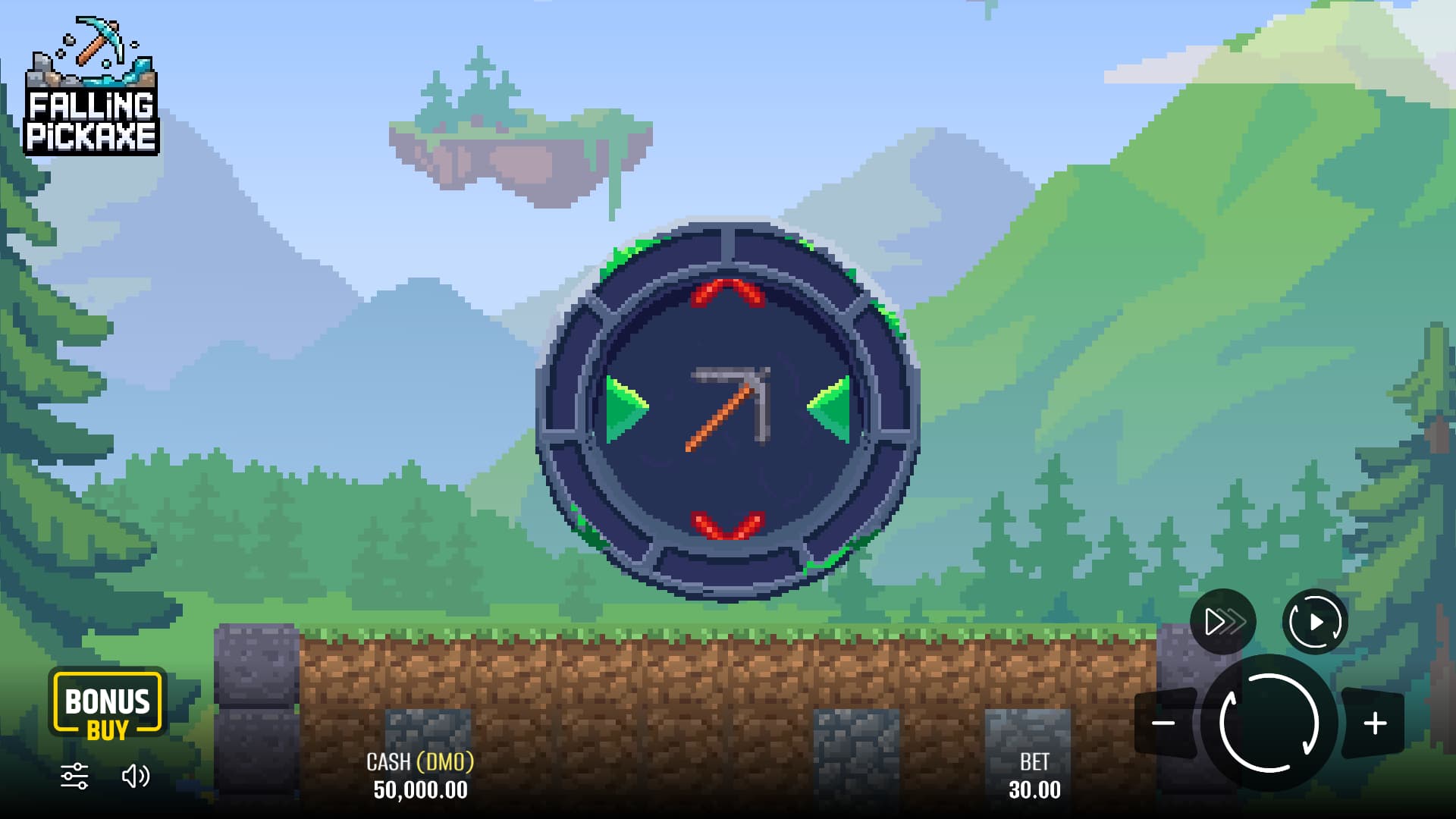
Open the game and check the mode first. Demo mode uses virtual credits; real-money mode uses a balance held by the operator. Find the rules menu and read the stake controls in the version you have opened.
Choose the amount for the round, then start the reel. The possible tool types are Wooden, Stone, Iron and Diamond. A Cross is also possible. That result means no pickaxe is awarded, so the mining sequence does not start on that spin.
The Pickaxe Reel
| Result | What happens |
|---|---|
| Wooden pickaxe | A mining round begins with the basic tool. |
| Stone pickaxe | The tool starts with more durability than Wooden. |
| Iron pickaxe | A stronger tool starts the descent. |
| Diamond pickaxe | The highest-tier tool starts the descent. |
| Cross | No tool is awarded on that spin. |
Pixmove describes a rule that awards a pickaxe after seven consecutive Cross results. It guarantees a tool on the next spin under that rule, not a profit or a specific top-tier result. Check the current in-game wording for how it applies to your version.
Durability and the Descent
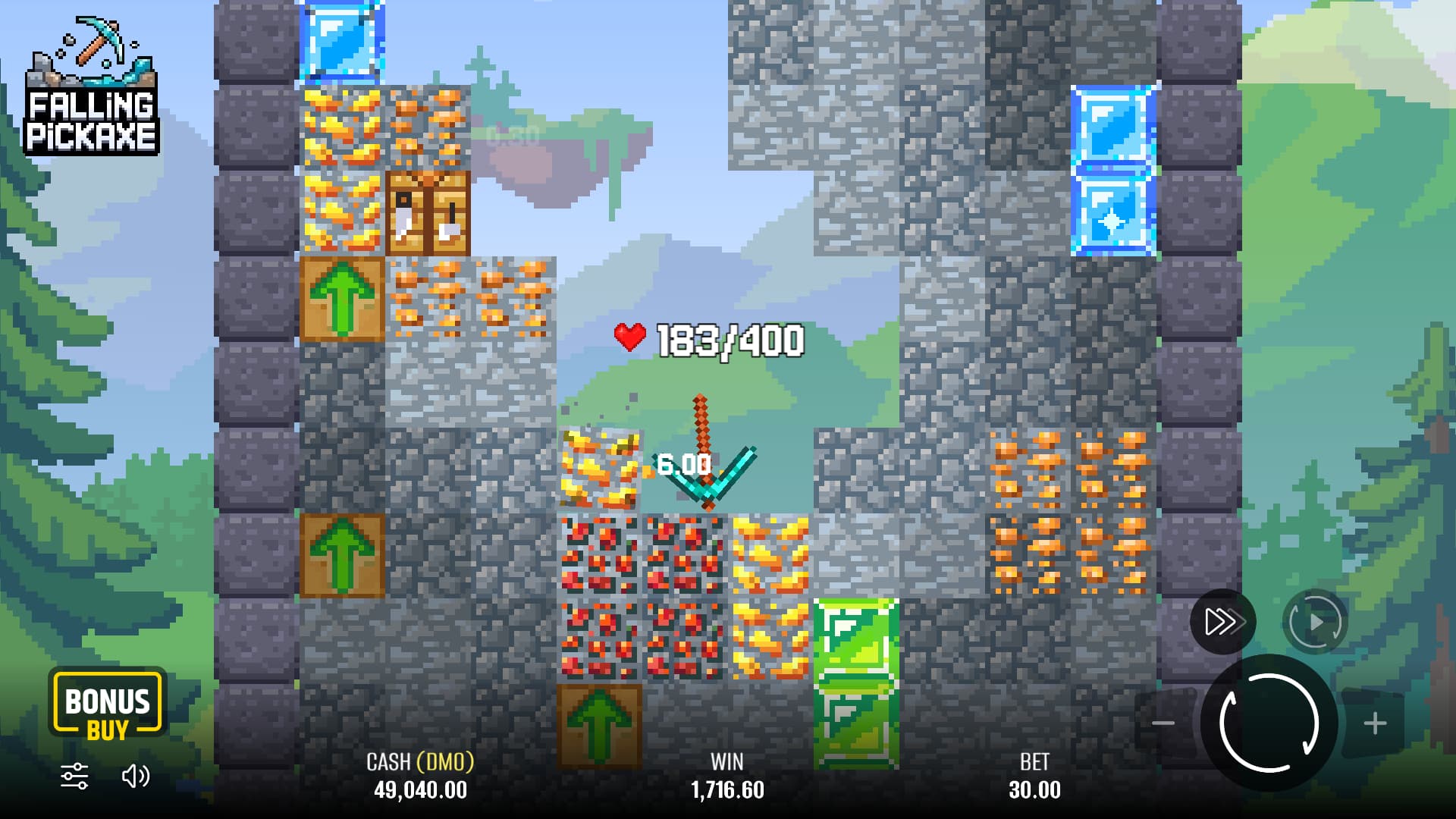
Each collision uses durability. The tool continues falling while it has life remaining and stops when that life runs out. A stronger pickaxe has more time to work through the mine, but the terrain it meets still affects the result.
Dirt and stone are ordinary terrain. Copper, redstone, gold, diamond and emerald are the resources named in the developer’s description. Consult the pay information in the game for exact block values. The amount of movement on the screen is not a reliable way to estimate the financial return.
The descent is automatic. You cannot select a route, choose a mineral to hit or repair the tool with a well-timed click. Watching the life display helps explain a round without changing its result.
TNT, Upgrade Arrows and Workbenches
TNT
An explosion clears nearby blocks and changes the space through which the pickaxe moves. Its effect belongs to the current round. An explosive animation alone does not tell you whether the round is profitable.
Upgrade Arrow
An arrow makes the tool larger for a limited time. Further arrows can stack the effect, according to Pixmove. This temporary size change is separate from moving up a tool tier.
Workbench
A workbench restores durability and can improve the pickaxe toward the diamond tier. It gives the tool more life during the same descent. A repaired tool can continue, but still needs useful encounters to produce a better return.
Checking the Result
Once durability reaches zero, the mining sequence ends and the round is settled. Compare the return with the cost rather than treating every displayed payout as a net win.
For example, a hypothetical £1 round returning £0.40 is a £0.60 loss overall. A £1 round returning £1 gives back the amount spent. These are examples of the arithmetic, not recorded outcomes or promises about Falling Pickaxe.
Bonus Buy
Pixmove describes purchase options that enter a round with a chosen pickaxe. Before selecting one, check the full amount charged and the current rules. The purchase price can be different from the base amount used to express the round’s multipliers.
A chosen tool removes one part of the starting uncertainty. It does not remove the random sequence that follows or guarantee a return above the purchase price.
Common Questions About the Rules
Does a diamond pickaxe guarantee a win?
No. It is the strongest tier, but the blocks encountered still matter. A return may be below the cost of the round.
Can I stop the fall with a click?
The mining sequence described here runs automatically until the tool’s durability is exhausted. Read the opened version’s controls for any available presentation options.
Is a Cross an error?
No. It is one of the reel outcomes. A loading error is a separate technical issue.
Should I increase the amount after a loss?
A higher amount increases the cost of the next round. It does not give you control over the tool or make a particular outcome due.