Falling Pickaxe Review – Gameplay, Features, Pros and Cons
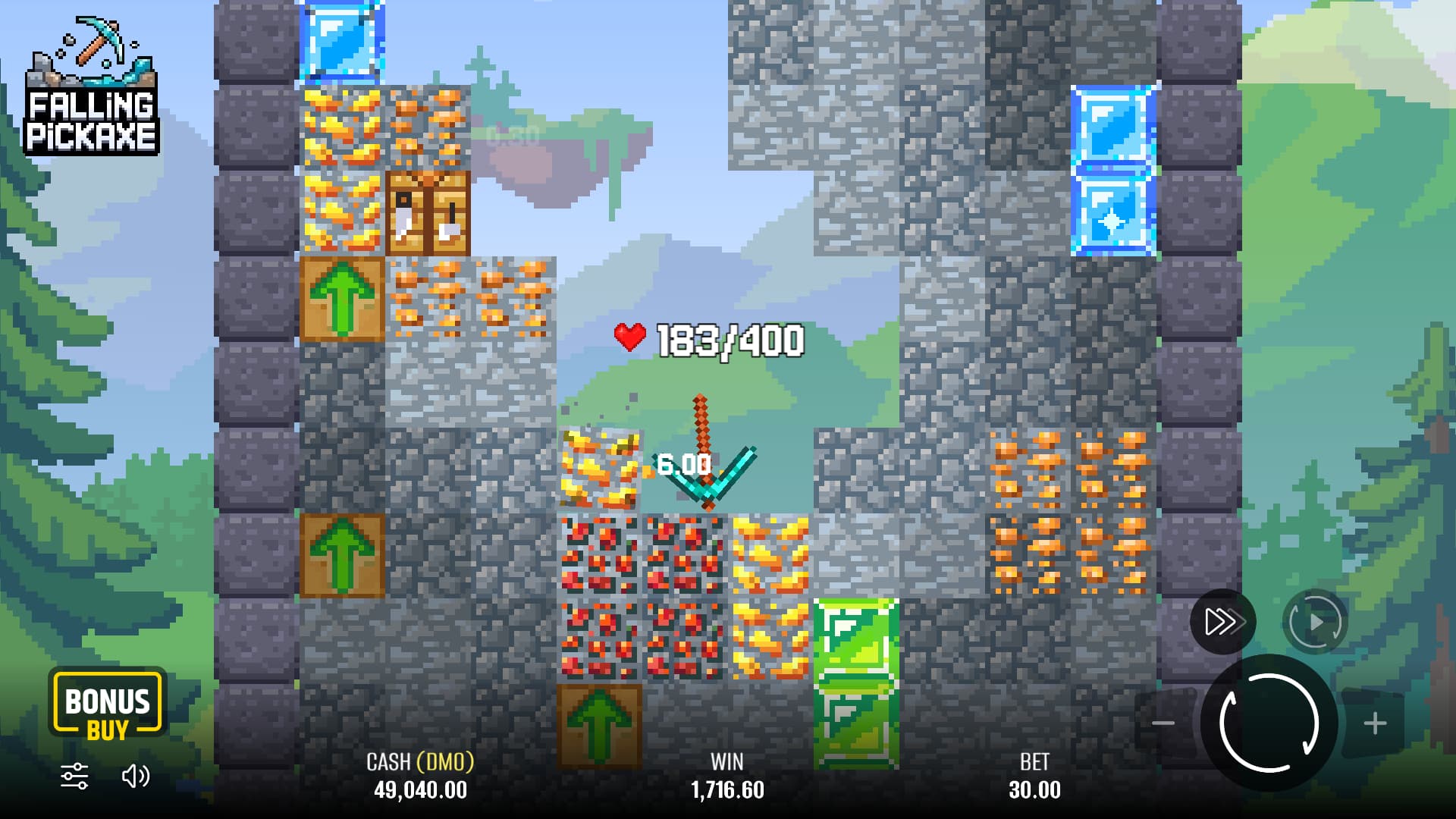
Falling Pickaxe takes a simple casino-game format and gives it a mining theme. The reel awards a tool, the tool drops into a wall of blocks, and the round lasts until the tool wears out. Ore, explosions and repairs give the descent some variety along the way.
The strongest part of the idea is how easily the action reads on screen. A pickaxe breaking rock needs little explanation, and a workbench repairing a damaged tool fits the setting. The main drawback is the lack of control after the round begins. You follow the action rather than decide where to dig.
Gameplay and First Impressions
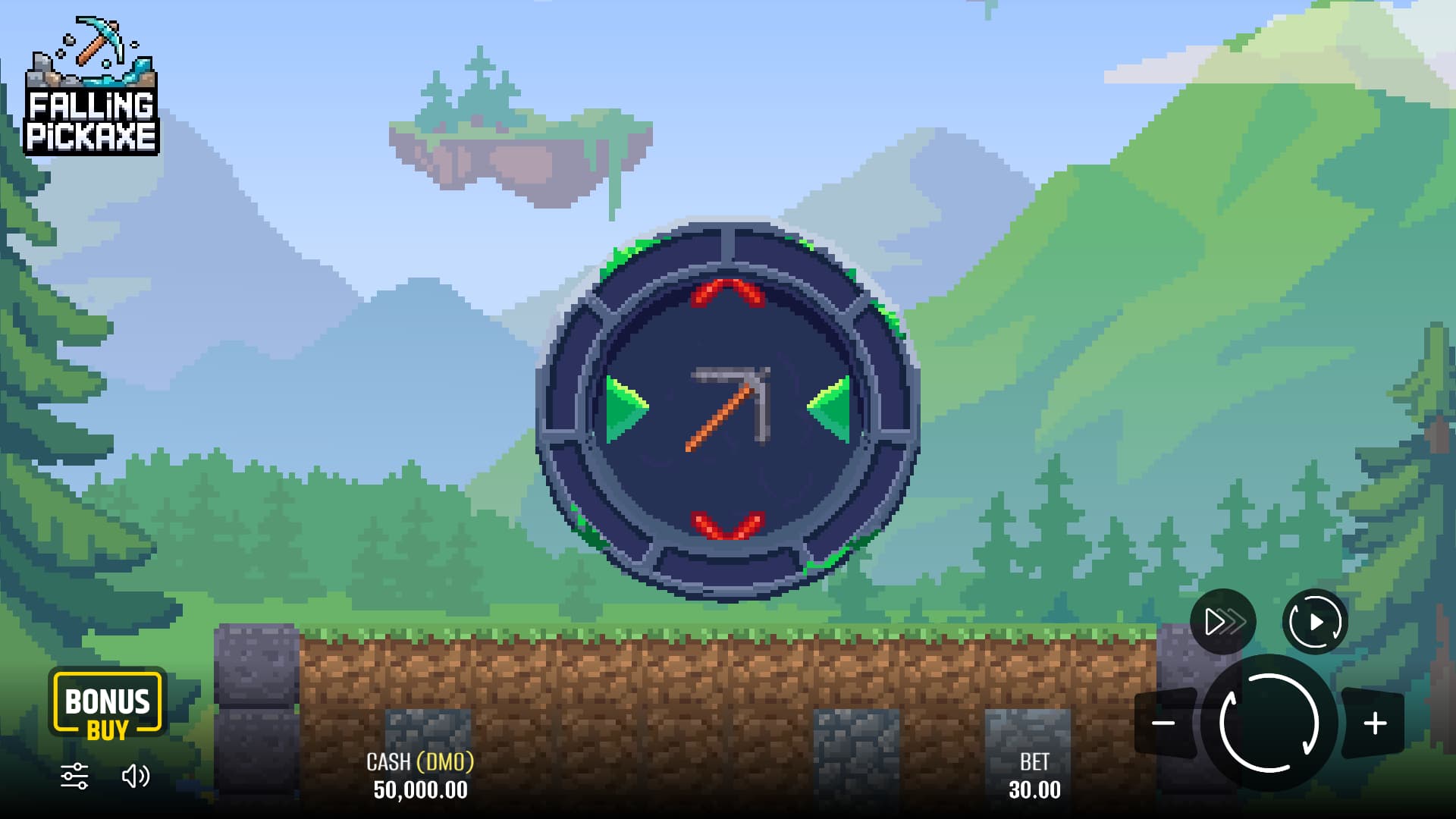
The game begins on a single reel rather than a large grid of paylines. Its result is easy to recognise: one of four pickaxes or a Cross. When a tool is awarded, the focus moves to the mine, where durability gives the round a clear stopping point.
That structure connects the opening result to the rest of the sequence. The reel chooses the object you then watch. It is a more coherent use of the theme than placing mining artwork behind an otherwise unrelated set of symbols.
A Cross is the less enjoyable side of the format. It ends a spin without giving you the mining sequence at all. Pixmove describes a pickaxe award after seven consecutive Crosses, but that rule concerns receiving a tool. It does not guarantee recovery of the amounts spent.
Pickaxes and the Mining Round
Wooden, Stone, Iron and Diamond are familiar enough that their order makes sense without much explanation. Stronger tools have more durability. The life display then gives you a reason to pay attention during the fall: how much work can the tool do before it breaks?
The distinction between time and reward matters here. A tool can last longer while spending some of that life on ordinary terrain. A diamond pickaxe is a stronger starting tool, not a payout already secured.
This keeps the later part of the round relevant. The opening reel is important, but the encounters inside the mine still shape the result. A workbench can also repair and improve a lower-tier tool during the descent.
Special Features
Workbench
The workbench is the feature that fits the theme best. The tool has a limited working life, and a repair station restores it. You can see why the event matters without reading a complicated bonus explanation. Improving the tool at the same time gives the round a clear change in direction.
TNT and Upgrade Arrows
TNT clears nearby blocks and changes the space around the pickaxe. An upgrade arrow enlarges the tool temporarily. Both add visible events to a sequence that would otherwise be a straightforward fall through terrain.
They make individual rounds less uniform, but they are still events awarded by the game. You cannot place an explosive block, choose a repair station or build a route through the mine. Players expecting those kinds of decisions should try the demo before depositing anywhere.
Graphics and Mobile Play
The pixel-art style suits the block field. Tools and minerals are easy to distinguish, while the landscape gives the mine a setting without changing the basic rules. The artwork is probably the first thing that will attract someone who likes block-based games.
The portrait layout is a sensible match for the falling motion. On a phone, the more important question is whether the amount, life display and result remain readable. Try the demo on your own device rather than assuming a promotional screenshot will match every browser.
The images also explain the theme’s possible downside. In an ordinary mining game, this artwork might suggest exploration and long-term crafting. Falling Pickaxe uses it for separate gambling rounds. There is no ongoing building project described by the developer.

RTP, Volatility and Bonus Buy
Pixmove’s current product page lists 95% theoretical RTP, low volatility and a 160× maximum win. Those are useful reference points, but none tells you how a short session will finish. Low volatility does not protect a session budget, and the maximum is not a typical return.
Bonus Buy options enter a round with a chosen tool. That can make the opening more direct, but the price matters. Check the total cost and the current rules before selecting an option. A stronger starting pickaxe can still produce a return below the purchase price.
The amounts shown in official images should also be treated as part of the artwork. They are not evidence of a typical session or results measured for this review.
Advantages and Disadvantages
| What works | What may disappoint |
|---|---|
| The round is easy to understand. | The player has little input during the fall. |
| Durability and repairs fit the mining theme. | Cross results skip the mining sequence. |
| Special blocks give the descent variety. | The same structure can become repetitive. |
| The developer provides a demo. | The theme may suggest more skill than the game offers. |
The game has enough going on to make the animation readable and varied. What it does not add is a large number of player decisions. That is likely to be the deciding point for most people: whether watching an automatic round is the kind of entertainment they want.
Who Might Enjoy Falling Pickaxe?
It is a reasonable fit for someone who likes short rounds, a small number of controls and a clear visual theme. You can follow the tool without learning a large symbol set or an elaborate control scheme.
It is less suited to someone looking for aiming, route planning or progress that carries between rounds. The tool types and blocks give the game a mining vocabulary, but they do not turn it into an arcade adventure.
The demo is useful for making that distinction. Once you have seen the starting reel and followed a few tools, you will have a better sense of whether the normal loop holds your interest.
Final Verdict
Falling Pickaxe makes good use of its setting. The tool, the life display and the workbench all belong to the same idea, so the round is easy to follow. The graphics support that idea instead of leaving the theme as a background image.
Its appeal is also quite specific. Most of the interest comes from watching what the tool encounters. If you want to make decisions throughout the action, the game may feel limited once the first few falls are familiar.
Start with the official demo and judge the regular round, not just the biggest tool or maximum-win figure. The format is simple enough that there is little reason to rush past that first look.
Game information and images: Pixmove product page and developer announcement. This review discusses the published game and its design; it is not a paid-play or statistical test.